Welcome to the Cosmic Calendar!
This is a space for astronomy that looks into the night sky as a living language of rhythms and presences. "How big, how far, how fast, how much"… is just the beginning. We give astronomical facts meaning so we can better understand life above and between us.
— Sabrina Dalla Valle, Senior Cosmic Analyst
Week of February 22-28: Venus and Mercury: Do-Si-Do
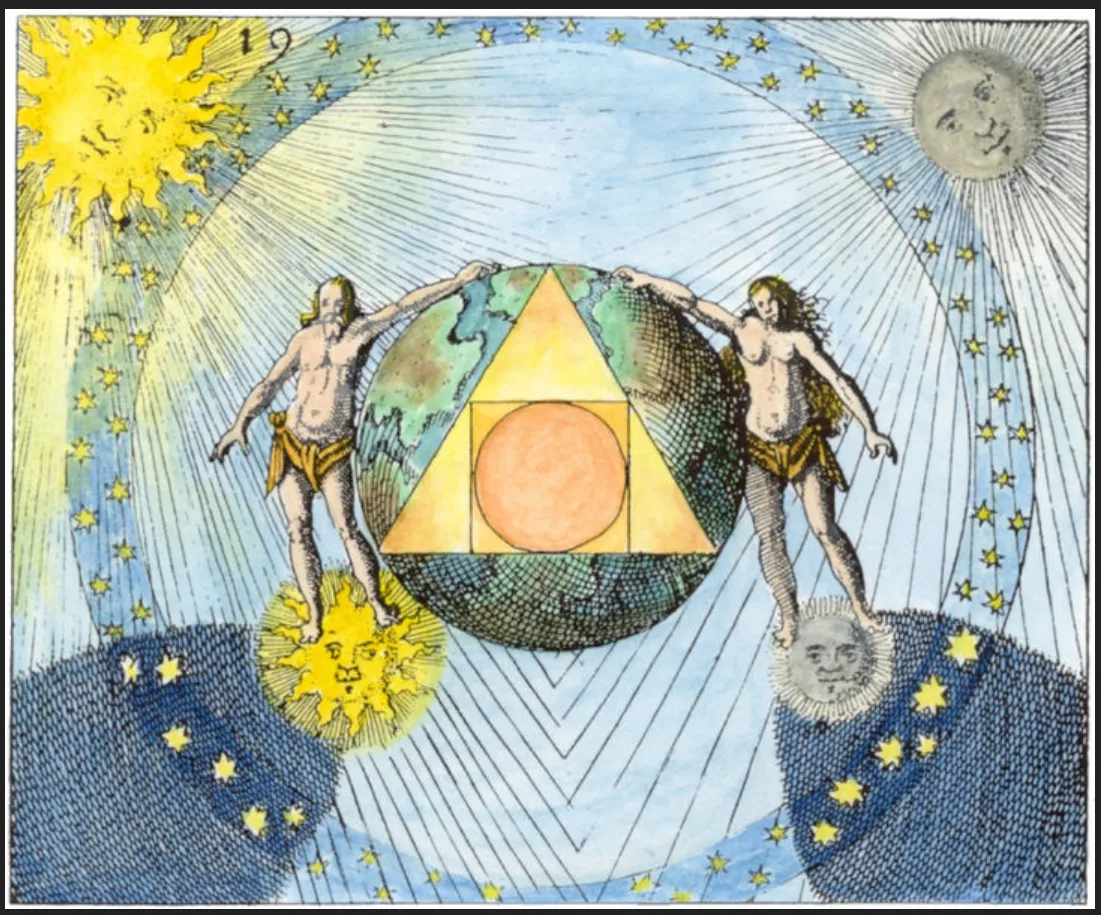
1549 Goecentric model of the Solar System
From what we see on Earth, many planets have been lining up behind the sun over the course of the last month-giving us the 'planet parade'. By FEBRUARY 24th, Mercury, Venus, the Sun, Mars, and Pluto will all be in the constellation of Aquarius. (Mars and Pluto are in front of the Sun, so they are not visible).
Saturn and Neptune are still hovering just above and to the left in Pisces.
Next up is Uranus, very slow moving, it hangs out in Taurus for eight years near the Pleiades. Jupiter lives in Gemini for a whole year, though it's getting smaller and fading slightly as Earth overtakes it in our faster orbit around the Sun. It’s nice to know the outer planets are shining down upon us, but you would have to really know how to read star charts and have a high-powered telescope to see the tiny dots of Neptune and Uranus way out there in the deeper night.
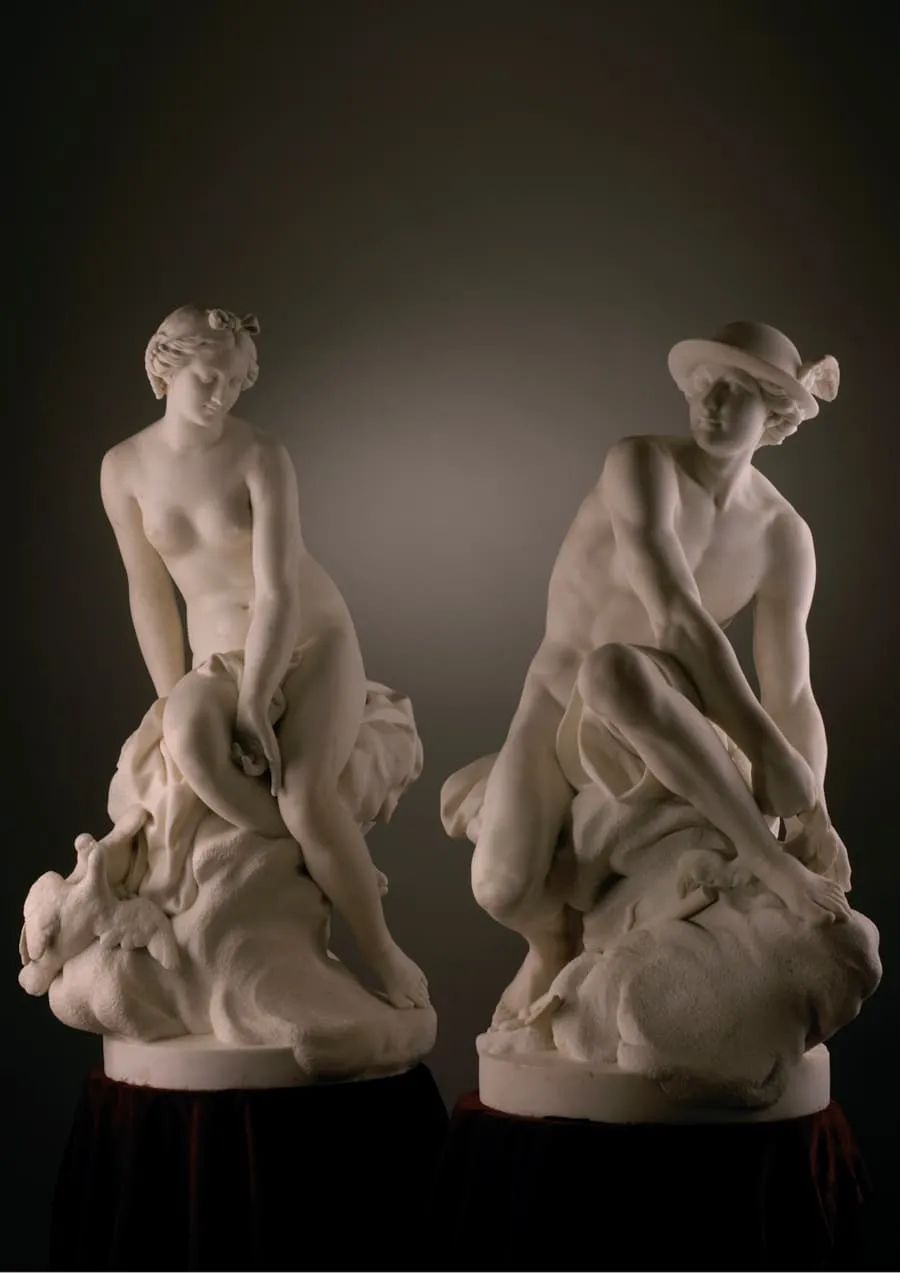
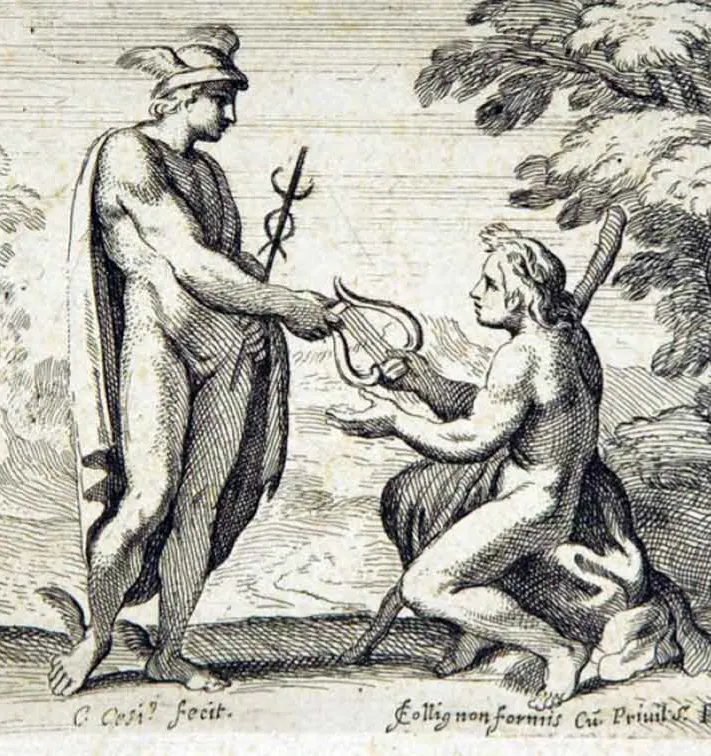
Venus and Mercury by Jean Baptiste Pigalle
THE REAL ACTION NOW is happening on our constantly moving, quickly changing Western horizon. Saturn will be sliding down a little each day leaving Neptune and passing Venus on MARCH 7th8th. VENUS rises higher each night as MERCURY fades fast in its descent. You can catch them in their do-si-do on FEBRUARY 26 right on the horizon.
Positioned between the Earth and Sun, Venus and Mercury as inner planets have a different movement pattern across our sky than the outer planets. They have a special relationship with the Earth popping up on each side of the horizon tied to the Sun, not staying too long or ever reaching high into the dome of the sky.
IN THE OLD WORLD, THESE TWO PLANETS WERE SEEN AS OMENS, especially when rising briefly to the East just before dawn. “Hey watch out today, there may be conflict coming.” The inner planets spoke directly to our destiny.
In the geocentric world, or Ptolemaic cosmography, before we had Copernicus’s heliocentric model, because Mercury moves faster and stays lower than any other planet, we thought Mercury was closer to us than Venus. The two inner planets were switched, giving us the order of Sun, Venus, Mercury and Earth.
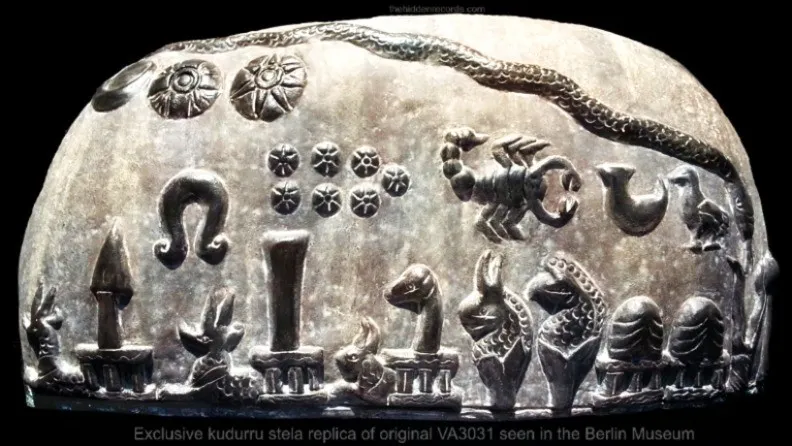
Tablet of Shamash
PLATO DESCRIBES THIS REVERSAL IN THE “TIMAEUS”. "The sun, the moon and five other stars were brought into being for the begetting of time—seven bodies placed into seven orbits traced by the period of the Different: the Moon in the first circle around the Earth, and the Sun in the second above it, then Venus, Mercury, Jupiter and Saturn. The Dawnbearer (the morning Star or Venus) and the Star said to be sacred to Hermes (Mercury) were set to run in circles that equal the Sun’s in speed, though they received the power contrary to its power. As a result, the Sun, the Star of Hermes and the Dawnbearer alike overtake and are overtaken by one another.”
There is more than just retrograde action described here. Occultists note that everything said in the mystery centers about Venus actually referred to the visual planet Mercury, and everything said about Mercury referred to the visual planet Venus. The essence of one was projected onto the body of the other. Our vision is part of the paradox. This reversal makes sense when you start to think about how initiatic teaching presented spiritual truths as ‘inside out’ realities.
We can look to the Hermetic doctrine of microcosmic and macrocosmic reflexivity described in the Emerald tablet. “Therefore, the truth is certain and there is no doubt that the inferior corresponds to the superior and the superior corresponds to the inferior.” This is about how the inner human life reflects the outer Cosmic and vice versa.
In many ways, the Earth still is the center of the universe, as we are the universe's reciprocal.