Welcome to the Cosmic Calendar!
This is a space for astronomy that looks into the night sky as a living language of rhythms and presences. "How big, how far, how fast, how much"… is just the beginning. We give astronomical facts meaning so we can better understand life above and between us.
— Sabrina Dalla Valle, Senior Cosmic Analyst
Skywatching Highlights for OCTOBER 2026
These indications are for EDT.
You can check your actual location for timing and visibility with this app:
https://in-the-sky.org
October midnights can be very mysterious; if you’re quiet you can hear amazing things hover straight overhead—like migratory birds!
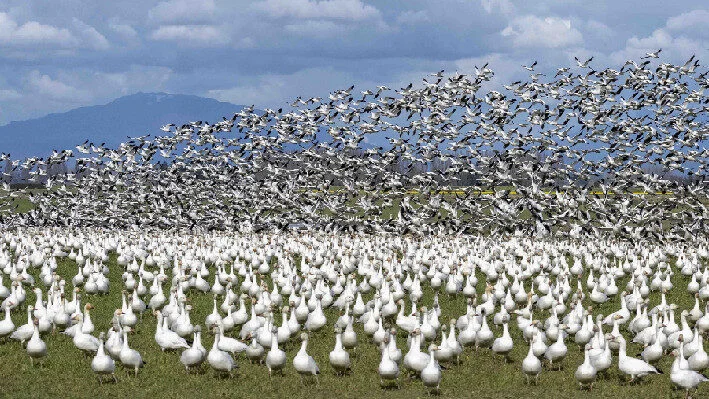
Migratory Birds
Most long-distance migrant birds, especially smaller ones, make truly demanding flight journeys, sometimes with days of continuous flapping of wings without a chance to rest. Birds’ heart rates can increase by 400% and their core body temperature has been recorded to be as high as 44.4˚C (112˚F) in flight.
Bird migration season peaks nationally in the US during the first week of October as they fly at the darkest hours of night. They navigate their long courses across the globe to the same destinations year after year using the whole natural world to navigate: the position of the sun in the sky, the Earth’s ever present magnetic field which they apparently ‘see’ by way of photochemical effects in their eyes, and the patterns of the stars at night. And when the clouds block them from seeing the earth and sky, they can rely on their sense of smell that is so sensitive to the emanations from all bodies of water.
If you want to follow the miraculous bird migratory paths in your specific area, you can check out this really new website from Cornell University to see how many and which ones are flying over your neighborhood on any given day: dashboard.birdcast.org
The Great Square of Pegasus marks the changing of the seasons
Pegasus the Flying Horse rises in the east on autumn evenings in the Northern Hemisphere (spring evenings in the Southern Hemisphere). It dominates the sky with its giant square asterism representing the body of the horse. You can find it near Cassiopeia (the wide ‘W’), reaching almost overhead at the zenith by late fall. It’s so big that it fills the span of two fist-widths held at arm’s length.
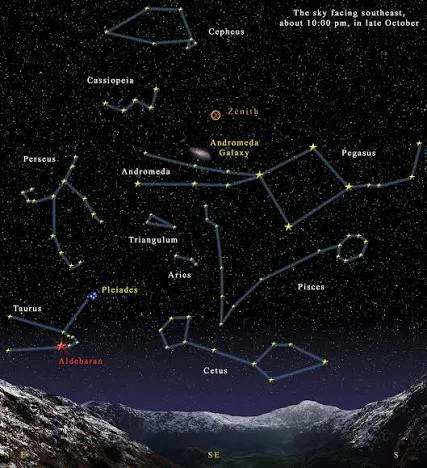
The Great Square of Pegasus
The northernmost and brightest star of the square is Alpheratz, which isn’t officially part of Pegasus, but the head of the Andromeda constellation suggesting that Pegasus is born from a woman’s head. In Greek mythology, he and his brother Chrysaor emerge from Medusa’s blood dripping from her neck at the moment Perseus beheads her. Stay tuned for the next article to learn more about this transformative belly in our starry sky.
Dark-sky window best for star observations from roughly Oct 06 – Oct 16.
October 3 Last Quarter Moon
8:25 EDT
Moon rises at midnight.
October 4 Saturn at Opposition
Saturn will be directly opposite the Sun and at its closest approach to Earth, attaining maximum brightness with a magnitude of 0.3 in the constellation Cetus. It will be brighter than any other time of the year and will be visible from sunset, when it rises in the east, moving across the sky all night long.
Moon near Pollux in Gemini rising at 01:09 (notice it will return here at the end of the month).
October 5 Moon conjunct Mars in Cancer
You will be able to see Mars rise with the Moon around 02:15 until sunrise. Also, a lunar occultation of Mars will be visible in Canada.
October 6 Moon conjunct Jupiter in Leo
In the pre-dawn hours in the east, the waning crescent moon will lie near bright Jupiter. If you are a night owl, you can watch both rise together around 03:22. From U.S. locations east of St. Louis, the Moon will move right in front of Jupiter, temporarily hiding it. Then, about 60 minutes later, the planet will reappear along the moon’s dark rim. Regulus, the brightest star in Leo will be right nearby.
If you have a telescope and are up a few hours before dawn, you can also see the dark sphere of the moon mass first pass over Jupiter’s largest moons: Europa, followed by Io and Callisto, then Jupiter itself and finally Ganymede.
October 7
Moon crosses at its descending node (moving south of the ecliptic) at 01:21 UTC.
The moon crosses the Sun's path twice a month, roughly every 14 days, in a 27.2-day cycle. These crossing points mimic the alignments of an eclipse. In biodynamic gardening, these moments are known to create unstable, chaotic celestial energy that disrupts normal plant rhythms. They are times of rest and contemplation.
October 10 New Moon
New Moon at 10:50 EDT tight with the Sun in the constellation Virgo.
October 12 Mercury at greatest eastern elongation
Look an hour after sunset. Mercury will reach its maximum angular separation from the Sun (25°09') as seen from Earth, making this the best time to observe the planet. Mercury will be in the constellation Libra.
October 18 First Quarter Moon
First Quarter Moon at 11:13 EDT
October 21
Moon crosses its ascending node (moving north of the ecliptic) at 08:54 UTC.
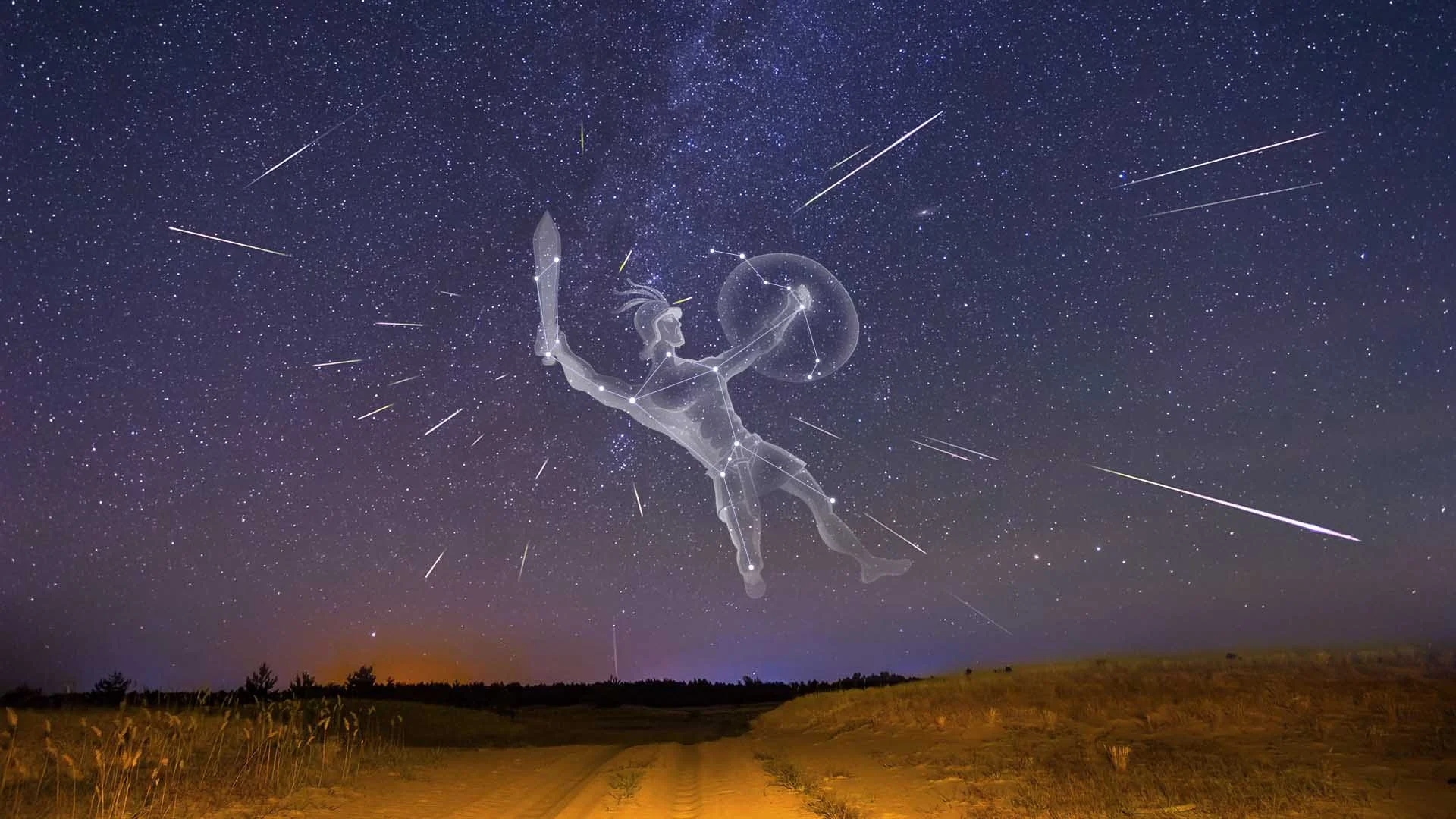
Orionid Meteor Showers
Orionid Meteor Showers peak on this night for both hemispheres.
The Orionids are a fast, elegant meteor shower produced by debris from Halley’s Comet. They will be raying out a long way from the periphery of the mighty constellation Orion with up to 20 meteors per hour. The 70% illuminate Moon sets at 03:00 in the morning so visibility will be best after midnight as the moonlight descends and Orion climbs— the higher Orion rises above the horizon, the more meteors you’re likely to see.
October 25/26 Full Moon
The exact moment of Full Moon will shine in the constellation Aries at 00:13 EDT which is just after midnight on October 25, then later that same night drift into Pisces.
This October Moon is known as the Blood Moon referring to the hunting season following the equinox, as well as the Moon’s actual color. The rising moon can have different colors depending on the temperature, pollution factor, dust particles and position in the sky. You may have noticed that sometimes the Moon shines with different shades of gray, or brown, orange, red, pink, purple or even blue. As the Moon goes higher, more yellow light makes it to our eyes, which is why the Moon might look yellow as it rises. Finally, as it peaks into its arch it shines a brilliant white.
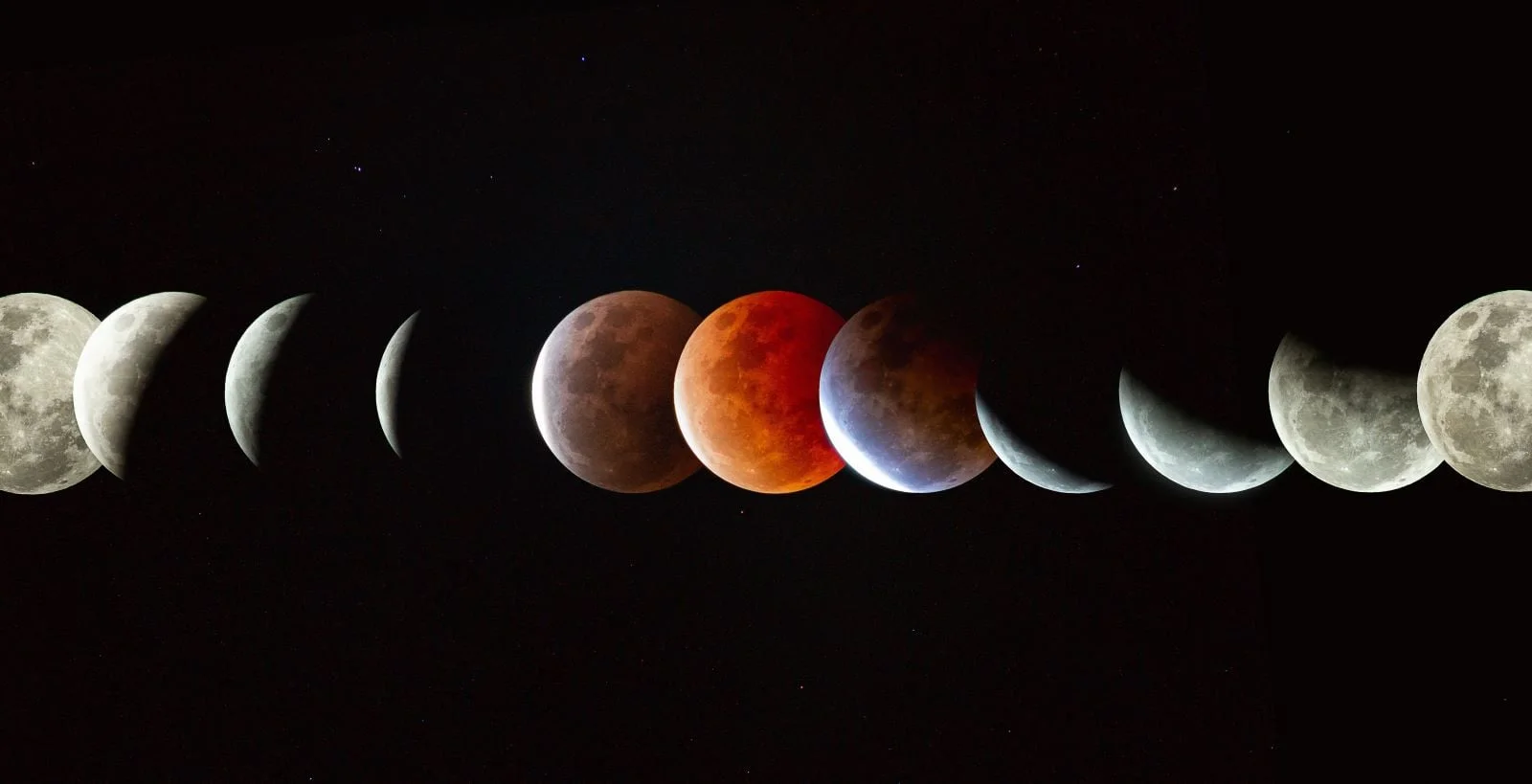
Colorful Moon Phases
October 31 Moon near Pollux in Gemini
The 63%-illuminated waning Gibbous Moon will be close to the yellow-orange star Pollux in the sky. It rises after midnight, so the early evening skies will be dark for Halloween.